

Table of Contents
- Why Pokémon Cards Have Different Price Points
- Supply and Demand: The Core of Card Pricing
- How to Determine Pokémon Card Value
- Reprints, Market Saturation, and Depreciation
- Difference Between Japanese and English Pokémon Cards
- Format Rotation and Playability vs. Collectibility
- The Role of Scalpers, Wholesale Pricing, and Retail Markup
- How to Find Authentic, Fairly Priced Cards
- Frequently Asked Questions
Last Updated: September 27, 2026
Why Some Pokémon Cards Are Cheaper: A Collector's Guide
Why Pokémon Cards Have Different Price Points
Pokémon cards don't all cost the same. A common Pidgeot might sell for a dollar while an identical-looking card from a different set commands ten times that price. Understanding why are some pokemon cards cheaper than others is essential for collectors and casual buyers seeking value.
Card prices reflect supply, demand, rarity, playability, and market mechanics. A card that seems identical to another might differ in print run, format legality, condition, or collectibility.
Liberty TCG hand-checks inventory to separate genuine value from inflated speculation. Knowing what drives price differences protects your collection and budget.
Supply and Demand: The Core of Card Pricing
Card prices follow straightforward economics: supply meets demand. When booster boxes flood the market, cards remain cheap. When a set goes out of print and demand persists, prices climb.
This dynamic shifts constantly. A card worth $5 six months ago might cost $15 if the set rotated out of competitive formats. Conversely, reprints can crash prices significantly.
Distribution matters enormously. Sets with massive print runs create supply gluts and low prices. Cards from limited-print sets command premiums because fewer copies exist.
Scalpers purchase inventory in bulk and resell at markup, creating temporary artificial scarcity. Recognizing scalper-driven spikes versus genuine scarcity prevents overpaying.
How to Determine Pokémon Card Value
Determining why are some pokemon cards cheaper requires evaluating rarity, condition, playability, and market saturation together.
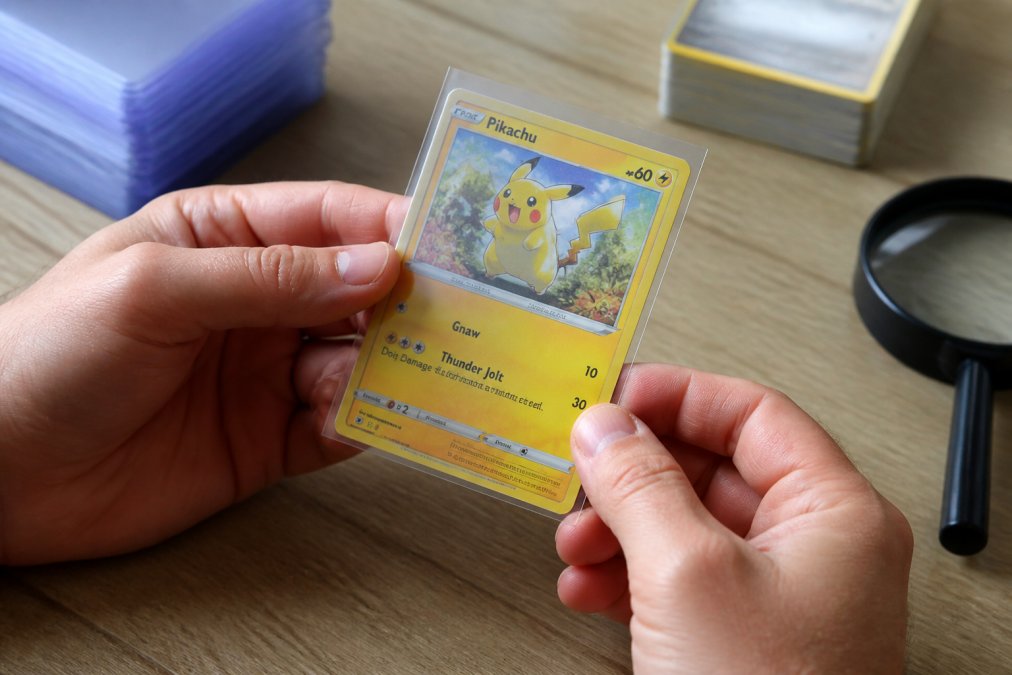
Start with the set symbol and number. A card numbered 102/102 from a small set is rarer than 102/200 from a massive release, indicating print run size and era.
Check pull rates: rare cards appear less frequently than commons; ultra-rare cards (holographic, full-art) have even lower pull rates. Lower pull rates mean fewer copies in circulation and higher prices.
Rarity and Pull Rates
Rarity determines scarcity: commons appear in every pack, uncommons regularly, rares occasionally, ultra-rares rarely, and secret rares (numbered beyond the set total) are scarcest.
Pull rates vary by set. A card with a 1-in-500 pull rate is inherently scarcer than one appearing in 1-in-50 packs, translating directly to secondary market pricing.
Secret rare cards command premiums because they're intentionally difficult to pull. Collectors pursue these variants for portfolio completion, driving demand and price.
Card Condition and Grading
Condition separates premium cards from bulk. A mint card grades 9-10; a played card grades 6-7; a damaged card grades 3-5. The difference between a 7 and a 9 can mean a 300% price premium.
Grading examines centering, corners, edges, and surface. Centering (how evenly the image sits within borders) is the most visible quality marker. Off-center cards are typically avoided.
Surface quality matters for high-value cards. Scratches on the holographic layer are permanent. Cards stored in sleeves and top-loaders maintain condition; cards in binders or traded between hands degrade quickly.
Professional grading (through services like PSA or BGS) adds legitimacy and premium. A graded 9 commands more than an ungraded card claiming 9-condition because grading removes subjective assessment. Collectors pay for certainty.
Reprints, Market Saturation, and Depreciation
Reprints are the market's great equalizer. When a popular card gets reprinted, supply surges and price crashes significantly.
Reprints make expensive cards accessible to casual players and budget collectors, democratizing access but devastating speculative portfolios.
Market saturation occurs when supply far exceeds demand. New sets with massive print runs create saturation immediately. Cards from saturated sets stay cheap for years until supply naturally depletes.
Most cards lose value over time as supply grows and novelty fades. Some cards appreciate, but depreciation is the baseline expectation. Understanding this prevents buying cards expecting them to hold value.
Difference Between Japanese and English Pokémon Cards
Japanese and English versions often price differently.
Some collectors prefer Japanese aesthetics, creating demand independent of gameplay utility.
English cards dominate competitive play because tournaments are primarily English-language regions. Japanese cards still command premiums in the collector market, creating a split-demand dynamic.
Format Rotation and Playability vs. Collectibility
Competitive Pokémon formats rotate annually, creating predictable price cycles. Understanding these cycles prevents overpaying at peaks.
How Format Rotation Works
The Pokémon Trading Card Game has two primary competitive formats:
- Standard: Cards from the most recent four to five sets are legal. This is the primary competitive format for organized play, Regional Championships, and World Championships.
- Expanded: A larger card pool including cards from the Black & White era onward. Expanded has a smaller competitive population and lower prize support.
Each year (typically in August or September), older sets rotate out of Standard and become legal only in Expanded. A card legal in Standard one month becomes Expanded-only the next. This rotation is announced months in advance, creating predictable market dynamics.
The Rotation Price Cycle: Speculation, Peak, and Crash
Card prices follow a predictable cycle tied to rotation announcements and format changes:
Pre-Rotation Spike (3-6 months before rotation)
Once rotation is announced, competitive players and speculators rush to acquire cards that will soon rotate out. The logic: "This card is legal now, demand is high, and it will rotate soon, buy before supply dries up." Prices spike as demand surges. A card worth $8 might jump to $15-$20 in the months before rotation. This spike is driven by fear of missing out (FOMO) and the perception of scarcity.
Peak Pricing (at or just before rotation date)
Prices peak as rotation approaches. Competitive players finalize deck builds, speculators make final purchases, and secondary market sellers raise prices to capitalize on urgency. This is the worst time to buy if you're seeking value.
Post-Rotation Crash (immediately after rotation)
Once rotation occurs, competitive demand evaporates. Players no longer need the card for Standard tournaments. Speculators who bought at the peak suddenly hold inventory with reduced demand. Prices crash, sometimes 50-70% in a matter of days or weeks. A card worth $18 before rotation might be $5-$8 after. This crash is swift and severe because the demand driver (format legality) disappears overnight.
Stabilization (months after rotation)
Prices stabilize at a new baseline determined by collectibility, rarity, and Expanded-format demand.
Playability vs. Collectibility: Two Separate Value Drivers
Understanding the difference between these two value drivers prevents costly mistakes:
Playability-Driven Value
Collectibility-Driven Value
Identifying Speculative Spikes vs. Genuine Scarcity
The key to avoiding overpaying is distinguishing temporary playability spikes from genuine long-term value:
Red Flags for Speculative Spikes
- The card's price spiked recently (within the last 1-3 months) tied to a new deck archetype or tournament result.
- The card is from a set that's still in print or recently rotated out of print.
- The card has no special artwork, low rarity, or limited collector appeal beyond its current competitive use.
- Social media and community forums are buzzing about the card's competitive potential.
- The card is legal in Standard but will rotate out within 6-12 months.
Indicators of Genuine Long-Term Value
- The card has been holding steady value for 1+ years despite format changes.
- The card has exceptional artwork, low pull rates, or is a secret rare or alternate art variant.
- The card has cultural significance (iconic Pokémon, memorable card design, historical importance).
- The card's price is stable or rising even after rotation or meta shifts.
- Collector demand (not just competitive demand) is evident in secondary market activity.
Timing Your Purchases Around Rotation
Smart collectors time purchases to avoid peaks and capture value:
- Avoid buying 2-3 months before rotation when prices are spiking due to FOMO. This is the worst time to buy.
- Wait 2-4 weeks after rotation for prices to stabilize after the initial crash. This is often the best time to buy cards with genuine long-term value, as speculators have exited and prices have normalized.
- Buy cards with strong collectibility indicators year-round, as their prices are less volatile and less tied to rotation cycles.
- Avoid chasing meta spikes unless you're a competitive player who needs the card for tournaments. Speculators almost always lose money on these plays.
Expanded Format as a Secondary Demand Driver
While Expanded has a smaller competitive population than Standard, it does provide ongoing demand for rotated cards. Some cards that crash after Standard rotation stabilize at a higher price than they would otherwise because Expanded players still need them. However, this secondary demand is typically 20-40% of Standard-era demand, so it doesn't prevent significant post-rotation crashes.
The Role of Scalpers, Wholesale Pricing, and Retail Markup
Scalpers are speculators who purchase inventory in bulk and resell at markup. During high-demand periods, scalpers buy booster boxes from retailers at wholesale prices, then resell singles on secondary markets at inflated prices. This creates artificial scarcity and temporary price spikes.
How to Find Authentic, Fairly Priced Cards
Finding authentic cards at fair prices requires knowing where to look and verifying authenticity for high-value purchases.
Frequently Asked Questions
Why are some Pokémon cards significantly cheaper than others?
Pokémon card prices depend on supply, demand, rarity, condition, and whether they're reprinted. Common cards from high-distribution sets cost $1 or less because millions were printed. Rare cards, vintage singles, and out-of-print sets command higher prices. Condition matters enormously: a raw card in poor shape costs far less than the same card graded 9 or 10. Reprints also crush value by flooding the secondary market with new copies of older cards.
How does card condition impact the resale value of Pokémon cards?
Condition is one of the biggest value drivers. A raw card in mint condition might fetch 50-70% of what a professionally graded PSA 10 version sells for. Visible wear, creases, or centering issues can drop value by 80% or more. Collectors seeking grading-ready cards specifically look for minimal imperfections. Even small defects like light edge wear or slight print spots can shift a card from one grade tier to the next, creating significant price differences in the secondary market.
What's the difference between Japanese and English Pokémon cards in terms of value?
English cards appeal to the larger Western collector base, driving higher demand and prices. Language preference, regional nostalgia, and which market a card was originally printed for all influence pricing.
Is it worth buying Pokémon cards in 2026?
Value depends on your goal. For playability in competitive formats, singles and newer sets offer affordable entry. For investment, focus on out-of-print sets, low pull-rate holos, and grading-ready raw cards from established sets. Modern mass-produced cards depreciate quickly due to market saturation. Vintage cards and first editions hold value better, but require authentication and condition assessment. Hand-checked cards from authorized wholesale sources reduce counterfeiting risk and ensure you're building a collection on solid foundations.