

Table of Contents
- Where to Buy Authentic Pokémon Booster Packs
- How to Spot Fake Pokémon Cards Before You Buy
- Authorized Pokémon TCG Retailers: What to Look For
- Pokémon Pack Tampering Signs and How to Detect Them
- Sealed Pokémon Booster Boxes vs. Individual Packs
- Verifying Seller Reputation and Marketplace Listings
- What to Do if Your Order Arrives Damaged or Inauthentic
- Frequently Asked Questions
Last Updated: October 9, 2026
Where to Buy Authentic Pokémon Booster Packs
Finding a reliable source for authentic Pokémon booster packs is the foundation of a collection you can trust. The market now spans official retailers to online marketplaces, but not all sellers maintain the same standards for authenticity and quality.
When shopping for authentic Pokémon booster packs, start with authorized retailers who source directly from The Pokémon Company. These sellers maintain distributor relationships and strict inventory controls.
Liberty TCG sources every product through authorized wholesale channels and hand-checks each item before listing it. This approach ensures you're getting genuine sealed products whether you order online or pick up locally.
How to Spot Fake Pokémon Cards Before You Buy
Counterfeits have grown sophisticated, but several telltale signs separate genuine booster packs from fakes. Learning them protects your investment and your collection.
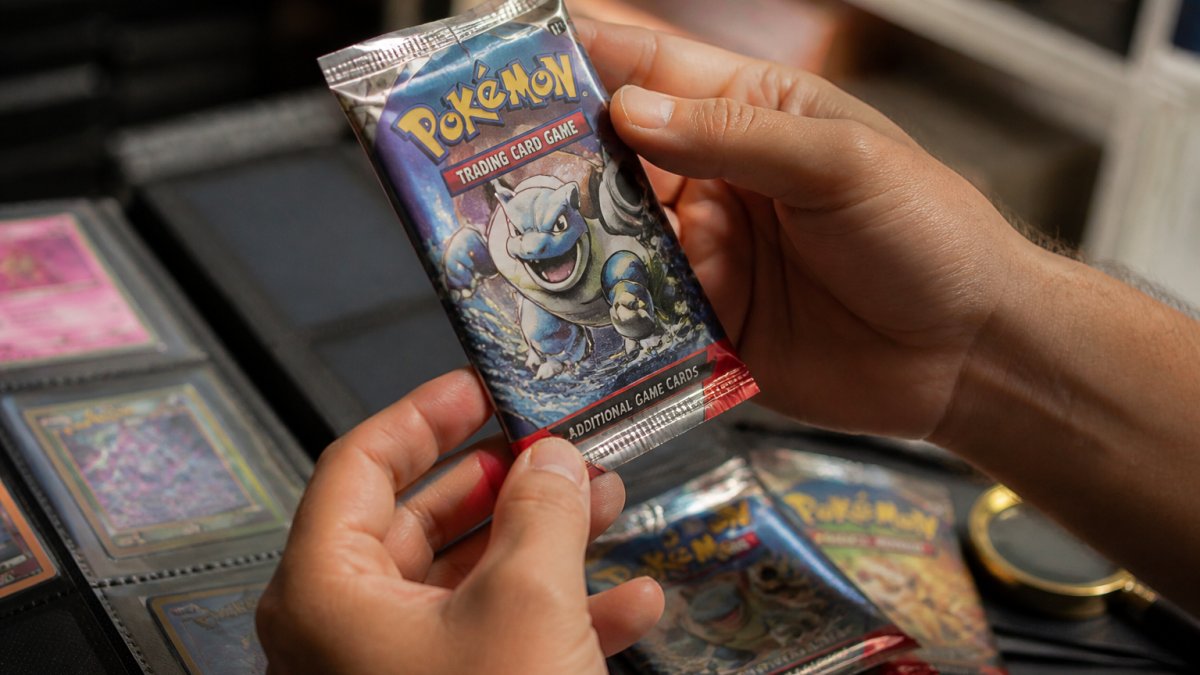
The packaging tells you a lot.
Check the set symbol and expansion code. They should be perfectly centered and printed in the exact color specified for that set.
Weight and feel matter too. Genuine packs have a specific heft from quality card stock, while counterfeits often feel lighter or flimsy.
Check holographic elements on the pack itself. Many modern packs feature holographic or special finishes on the artwork that catch light consistently and show depth.
Authorized Pokémon TCG Retailers: What to Look For
Authorized retailers operate under guidelines set by The Pokémon Company and have passed a vetting process, which protects you from counterfeit products.
Authorized sellers display official branding or certification and are transparent about their wholesale relationships. Ask about authenticity and they respond with detail, not vague assurances.
The best authorized retailers keep pricing within reasonable ranges. Legitimate sellers may compete through efficient operations or bulk purchasing.
Favor retailers who specialize in Pokémon TCG rather than treating it as a side offering. Specialists understand set, pack type, and condition nuances.
Check return and refund policies. Authorized retailers stand behind their products with clear dispute paths, and a seller willing to accept returns signals confidence in their sourcing.
Pokémon Pack Tampering Signs and How to Detect Them
Resealed booster packs are one of the most common fraud tactics: someone opens a pack, removes valuable cards, then reseals it to look untouched.
The original seal on authentic booster packs runs straight and even across the top.
Examine the seal's color and finish. Factory seals look consistent throughout; resealed packs sometimes show color variation or a matte finish where the original had gloss.
Look for evidence of opening.
Overall condition matters. A genuinely sealed pack shows uniform wear from storage and handling; heavy wear on one section while the rest looks pristine suggests tampering.
Sealed Pokémon Booster Boxes vs. Individual Packs
Understanding booster boxes versus individual packs helps you pick the right format for your collecting goals.
A sealed booster box contains 36 booster packs, factory-sealed by The Pokémon Company, guaranteeing a complete, untampered set. The per-pack cost is typically lower than buying individual packs separately.
Individual packs offer flexibility, buy exactly what you want without committing to a full box, ideal for testing a new set or sticking to a budget. They require more careful scrutiny, since each pack is a separate transaction.
Booster boxes suit serious collectors and competitive players opening multiple packs, offering security and better per-pack value. Individual packs suit casual collectors building a collection gradually.
Chaos Rising Sleeved Booster Pack [CRI] →
When comparing prices, calculate the per-pack cost for boxes. Liberty TCG offers sealed booster bundles like the Pitch Black Booster Bundle at $35.00 for six packs, and individual sealed packs like the Chaos Rising Sleeved Booster Pack at $6.50 each.
![Chaos Rising Sleeved Booster Pack [CRI]](https://cdn.shopify.com/s/files/1/1004/1907/6392/files/684448.jpg?v=1789161987)
![Pitch Black Booster Bundle [PBL]](https://cdn.shopify.com/s/files/1/1004/1907/6392/files/692942.jpg?v=1787420714)
| Format | Best For | Quantity | Verification Needs |
|---|---|---|---|
| Sealed Box | Serious collectors, competitive players | 36 packs | Single seal inspection |
| Booster Bundle | Regular collectors, testing sets | 3-6 packs | Bundle seal verification |
| Individual Pack | Casual collectors, budget-conscious | 1-2 packs | Pack-by-pack inspection |
Verifying Seller Reputation and Marketplace Listings
Seller reputation is the strongest predictor of whether your booster packs are genuine. Most counterfeit listings come from sellers who look legitimate until you inspect the details, so a short, repeatable vetting routine catches the vast majority before money changes hands.
A Five-Step Seller Vetting Checklist
1. Read the listing photos, not just the text. Authentic sellers photograph the actual pack or box they're shipping, crimped seal, set symbol, expansion code, and the copyright line on the back.
2. Compare the asking price against the going rate. A listing priced 40-60% below every other seller for the same set and pack type is a common pattern.
3. Check the seller's history for authenticity-specific feedback. Generic five-star reviews are easy to accumulate.
4. Confirm the return policy in writing. Accepting returns on sealed trading-card products signals confidence in sourcing; marking all booster pack sales "final" or "no returns" removes your recourse if something arrives tampered.
5. Verify the seller is a registered business when possible. Registered businesses operate under a legal framework that gives you a paper trail for disputes.
Online Storefronts vs. Local Pickup: Both Work
Buying online and buying in person are equally valid paths to authentic packs, the differentiator isn't the channel, it's whether the seller hand-checks inventory and sources through authorized wholesale. Online ordering offers wider selection, price comparison, and full review histories; local pickup lets you inspect the seal in person and take the product home the same day. Many collectors use both: sealed boxes online for value, individual packs locally to verify by hand. Liberty TCG offers local pickup in Kansas City alongside online ordering.
Red Flags That Should End the Conversation
- The seller refuses to provide additional photos of the seal or packaging.
- The listing uses only manufacturer stock images across every product.
- The seller can't or won't describe where their inventory comes from.
- Reviews mention resealed packs, missing hits, or "weighed" product.
- The price is far below every comparable listing for the same set.
- The seller pressures you to complete the transaction off-platform.
Any one of these is enough to walk away. Authentic product is widely available; there is no reason to accept risk on a listing that fails even a single check.
What to Do if Your Order Arrives Damaged or Inauthentic
Even careful buyers occasionally receive a resealed pack, a crushed box, or a product that isn't what was listed. What separates a resolved dispute from a lost one is how quickly and thoroughly you document the problem. These steps follow the evidence standards card issuers, payment platforms, and marketplace resolution systems actually use.
Step 1: Document Before You Open Anything
Do not open a booster pack or break a booster box seal if you suspect tampering, the sealed condition is your strongest evidence. Photograph:
- The shipping box or mailer, including the label and any visible damage.
- The product's outer seal, crimped edges, and any wrinkles or gaps.
- The set symbol, expansion code, and copyright line on the packaging.
- A side-by-side shot with a known-genuine pack of the same set, if you have one.
Take photos in natural light and keep the originals, no cropping or filters. Timestamped images from the day of delivery carry far more weight than photos taken a week later.
Step 2: Contact the Seller First, in Writing
Reach out through the platform's messaging system or the seller's contact form so there's a written record. Include your order number, photos, and a plain description of the problem, and give the seller 24 to 48 hours to respond. Legitimate sellers who hand-check inventory want to know when something slipped through, and most offer a replacement or refund without argument.
Step 3: Escalate Through the Right Channel
If the seller doesn't respond or refuses to make it right, escalate through the channel you paid with:
- Credit or debit card: Federal law gives you the right to dispute charges for goods that were not as described (What To Do if You’re Billed for Things You Never Got, or You Get Unordered Products). Contact your card issuer and file a dispute in writing, including your photos and the seller communication log. Card issuers generally require you to attempt resolution with the merchant first, which is why Step 2 matters.
- PayPal or a similar payment processor: These platforms maintain their own buyer protection programs for items that arrive significantly not as described. File through the platform's resolution center and upload your evidence.
- Marketplace purchase: Use the platform's official dispute system. Most major marketplaces have dedicated counterfeit-goods reporting paths in addition to standard returns, and reporting a counterfeit listing can also protect other buyers.
Step 4: Preserve Everything Until the Dispute Closes
Keep the product sealed, plus the original packaging, tracking number, photos, and every message exchanged with the seller. Don't discard anything until the dispute closes, some platforms ask for the item back, others ask you to hold it during investigation. If you ship it back, use a trackable method and keep the receipt.
Step 5: Report Counterfeits Beyond Your Own Order
If you've confirmed a product is counterfeit or resealed, report the listing to the marketplace and, where relevant, the manufacturer's brand-protection team. Reporting won't recover your money directly, but it removes the listing, supports other buyers' claims, and discourages relisting under a new storefront.
Why Hand-Checked Sourcing Prevents Most of This
Every step above remedies a problem a hand-checking seller catches before shipping. When a retailer inspects each pack's seal, verifies the set symbol and expansion code, and sources through authorized wholesale channels, the resealed and counterfeit products that drive most disputes never enter the inventory. That's the practical reason to prioritize sellers who describe their sourcing and inspection process openly, not because online buying is riskier than local pickup, but because the seller's verification standard determines whether you ever need these steps.
Frequently Asked Questions
Where can I buy authentic Pokémon booster packs online?
Purchase from authorized Pokémon TCG retailers that source through official wholesale channels. Look for sellers with transparent sourcing practices, hand-checked inventory verification, and strong buyer protection policies. Established retailers typically display official authorization badges and offer buyer guarantees. Check seller ratings, return policies, and whether they provide detailed product photos and condition descriptions before shipping.
How can I tell if a Pokémon booster pack is real?
Authentic booster packs have crisp, clean packaging with sharp text and vibrant colors. The seal should be straight, secure, and impossible to open without tearing. Check for consistent font weight, proper spacing, and accurate card counts listed on the package. Counterfeit packs often show blurry printing, misaligned text, or loose seals. Compare the packaging against official product images from the Pokémon Company. If something feels off about the weight, texture, or appearance, ask the seller for additional photos or verification of authenticity before purchasing.
What are the signs of a tampered Pokémon booster pack?
Look for visible tears, creases, or gaps along the seal that have been reglued or patched. The foil wrapper should be smooth and taut, not wrinkled or loose. Check that the back flap is properly sealed and aligned. Tampered packs often show adhesive residue, discoloration around the seal, or inconsistent pressure marks. The card count window should be intact with no signs of opening. If you receive a pack with any of these signs, document it with photos and contact the seller immediately for a return or refund.
Is it better to buy individual booster packs or a sealed booster box?
Individual packs suit collectors who want flexibility and lower upfront costs, while sealed booster boxes offer better per-pack value and guarantee freshness for long-term storage. Boxes are ideal if you're building a portfolio or seeking grading-ready cards in volume. Individual packs work well for casual collecting or testing a new expansion. Consider your budget, storage space, and collecting goals. Sealed products from authorized retailers provide equal authenticity regardless of format, the key is verifying the seller's sourcing practices.