

Table of Contents
- Why Raw Pokémon Singles Matter for 2026 Investors
- Raw vs Graded Pokémon Cards: Which Strategy Wins
- How to Evaluate Raw Pokémon Card Condition
- Understanding Pokémon Card Grading Potential
- Pokémon Card Price Trends and Market Timing
- Building Your Raw Card Portfolio: Selection and Budget Strategy
- Risk Management and Liquidity: What You Need to Know
- Frequently Asked Questions
Last Updated: October 5, 2026
Why Raw Pokémon Singles Matter for 2026 Investors
Investing raw pokemon singles has become a serious strategy for collectors in 2026 who understand the numbers. Unlike sealed products, raw cards offer lower entry costs and faster liquidity when you know what to look for. The key difference is simple: a raw card costs less upfront, but its value depends entirely on condition and grading potential.
At Liberty TCG, we've watched the market shift significantly. Collectors are no longer waiting for sealed products to appreciate. Instead, they're identifying specific raw singles with strong fundamentals, cards that grade well, have collector demand, and sit in the sweet spot between affordable and valuable. This approach requires more skill, but it also offers more control over your portfolio.
The 2026 landscape favors collectors who can evaluate condition accurately. Grading fees cut into profit margins, so understanding which raw cards justify the cost of grading is critical. We'll walk you through exactly how to build a portfolio that works.
Raw vs Graded Pokémon Cards: Which Strategy Wins
The choice between raw and graded cards comes down to your timeline, capital, and risk tolerance. Graded cards offer certainty, you know exactly what you're buying and its market value. Raw cards offer potential, but only if you assess condition correctly.
Graded cards command premium prices because buyers pay for authentication and condition verification. A PSA 9 or PSA 10 card sells faster and with less negotiation. The tradeoff is cost. For a $20 raw card, a $30 grading fee makes no sense. For a $200 raw card with strong grading potential, it's worth serious consideration.
Raw cards let you build inventory at lower cost. You're betting on your ability to identify cards that will grade well. If you're right, the spread between raw and graded prices becomes your profit. If you're wrong, you own a card that didn't grade as well as expected, and now you're underwater on the grading investment.
The real strategy combines both. Start with raw singles to build volume and learn condition assessment. Once you've identified cards with consistent grading results, move some inventory into graded copies for faster sales and premium pricing.
How to Evaluate Raw Pokémon Card Condition
Condition assessment is the skill that separates profitable investors from collectors who lose money on grading fees. You need a repeatable method, not guesswork.
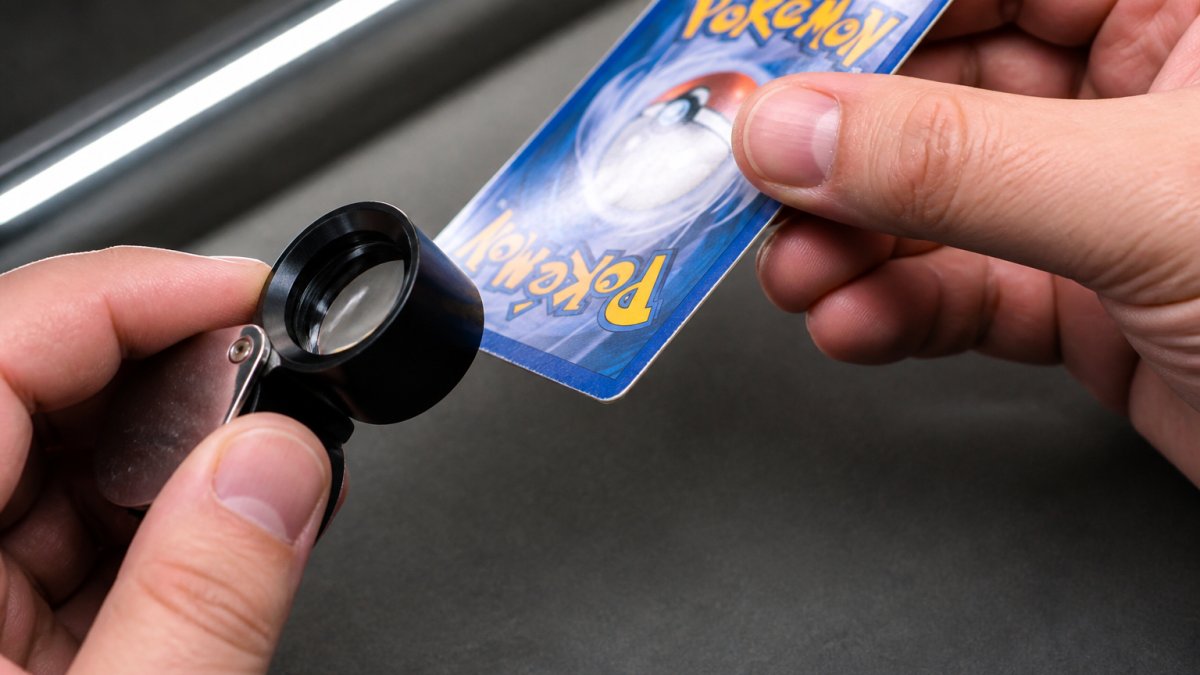
Start with the corners. Corners take the most damage in transit and storage. Look for wear patterns: are the corners sharp or rounded? Is the wear uniform or concentrated on one edge?
Next, examine the surface. Tilt the card under bright light at a 45-degree angle. Look for scratches, dents, or print lines. Minor surface wear is normal. Deep scratches or visible dents drop the grade significantly.
Centering matters more than casual collectors realize. Is the image centered within the borders, or is it shifted? Off-center cards grade lower, even if the surface is pristine.
Finally, check for manufacturing defects. Pokémon cards sometimes have print spots, ink lines, or edge wear from the production run itself. These are not your fault, but graders will count them against the grade.
Use this framework consistently. Grade 10 cards are rare, near-perfect with sharp corners, clean surface, perfect centering. Grade 9 cards have minor wear but remain sharp and clean. Grade 8 cards show noticeable but light wear.
Understanding Pokémon Card Grading Potential
Grading potential is the spread between a card's raw price and its graded price. A card with high grading potential is one that will increase significantly in value once graded. A card with low grading potential won't justify the grading fee.
Start by tracking recent sales of graded versions of the same card. If a raw Moltres - 130/128 illustration rare sells for $20, but graded PSA 9 copies of the same card sell for $80, the spread is $60.
![Moltres - 130/128 [30C]](https://cdn.shopify.com/s/files/1/1004/1907/6392/files/716219.jpg?v=1789660147)
Not every card in your collection justifies grading. A $6 raw card with a $15 grading fee needs to grade high enough to reach $25+ after grading to break even. Many cards simply won't hit that threshold.
High-value cards with strong collector demand show the best grading potential. Cards from popular sets like the 30th Celebration series, cards with competitive playability, and illustration rares with artistic appeal tend to hold value well when graded.
The timing of grading matters too. Grading times fluctuate based on volume. Faster services cost more. Calculate whether the premium you'll earn justifies the expedited fee, or whether waiting is acceptable.
Pokémon Card Price Trends and Market Timing
Market timing in Pokémon cards is about recognizing cycles, not predicting the future. Prices spike when new sets release, when hype builds around specific cards, and when major tournaments drive competitive demand. They stabilize or decline when the hype fades and inventory normalizes.
2026 has seen sustained interest in illustration rares and special sets. Cards like Maushold - 146/128 and the Zapdos/Moltres trio have maintained strong demand because they appeal to both collectors and competitive players. This dual demand creates price stability, which is favorable for investors building long-term portfolios.
![Maushold - 146/128 [30C - 146/128]](https://cdn.shopify.com/s/files/1/1004/1907/6392/files/716228.jpg?v=1790003709)
Watch for seasonal patterns. Spring and summer typically see higher prices as collectors spend tax refunds and have more disposable income. Fall and winter can see softer demand, which creates buying opportunities.
Recent sale prices tell you where the market actually is, not where sellers hope it will be. Check completed listings on secondary markets, not active listings. A card listed for $50 means nothing if no one is buying at that price.
The key to timing is patience. You don't need to buy every card immediately. Build a watchlist of cards you want to own, track their prices for 2-4 weeks, and buy when they dip. Most cards show price volatility in that window.
Building Your Raw Card Portfolio: Selection and Budget Strategy
Portfolio construction starts with defining your budget and time horizon. Are you investing $500 or $5,000? Do you plan to hold for one year or five years? Your answers determine which cards make sense.
For small budgets ($500-$1,500), focus on raw cards in the $10-$30 range with strong grading potential. Moltres - 130/128 ($20), Zapdos - 133/128 ($15), and Maushold - 146/128 ($25) represent this range well, all grading-ready, all with collector demand.
![Zapdos - 133/128 [30C]](https://cdn.shopify.com/s/files/1/1004/1907/6392/files/716221.jpg?v=1789660151)
For mid-sized budgets ($1,500-$5,000), add higher-value cards ($50-$150 range) alongside your core holdings. These cards appreciate faster when graded, but they also require better condition assessment.
For large portfolios ($5,000+), include some sealed products alongside your raw singles. Sealed products appreciate more slowly but with less condition risk. This reduces portfolio volatility.
Diversify across set types: illustration rares, competitive staples, vintage reprints, and special editions. Don't overweight a single card or set. If one market segment corrects, your entire portfolio doesn't tank.
| Portfolio Size | Budget Range | Card Count | Avg Price/Card | Grading Candidates | Sealed % |
|---|---|---|---|---|---|
| Small | $500-$1,500 | 20-50 | $15-$30 | 5-10 cards | 0-10% |
| Medium | $1,500-$5,000 | 40-100 | $20-$50 | 15-30 cards | 10-20% |
| Large | $5,000+ | 100+ | $30-$100 | 30+ cards | 20-30% |
Track your purchases and grades in a spreadsheet. Note the purchase price, grading cost, grade received, and sale price (if sold). After 20-30 cards, you'll see patterns in which types of cards grade well and which consistently disappoint.
Liberty TCG's grading-ready inventory is hand-checked specifically for this workflow. We source through authorized wholesale channels, which means every card meets authenticity standards before it reaches your hands.
Risk Management and Liquidity: What You Need to Know
Investing raw pokemon singles in 2026 carries real risks. The biggest is overpaying for cards that don't grade as well as expected. The second is illiquidity, owning cards no one wants to buy.
Grading risk is manageable if you're conservative. Assume every card will grade one point lower than your assessment. If you think it's a 9, budget for an 8. This cushion protects your math.
Liquidity risk is more subtle. Not every card sells quickly, especially raw cards. Graded cards sell faster because buyers know exactly what they're getting. Raw cards require negotiation and condition discussion.
Diversification reduces portfolio risk. Own cards across multiple sets, price ranges, and card types. If one segment of the market corrects, your entire portfolio doesn't follow.
Have an exit strategy before you buy. Know the price at which you'll sell each card. This prevents emotional decision-making and forces you to think through the math upfront.
Consider the cost of selling. This affects your profit calculations. Cards need higher appreciation potential to justify the selling costs.
Building a portfolio of investing in raw Pokémon singles 2026 requires discipline, but the strategy works when you combine accurate condition assessment with realistic profit expectations.
Frequently Asked Questions
Are Pokémon cards worth investing in 2026?
Pokémon cards remain a viable alternative investment for collectors willing to research market trends and build a strategic portfolio. Raw singles offer lower entry costs than graded cards, making them accessible for budget-conscious investors. Success depends on card selection, condition assessment, and realistic expectations about resale timelines. The market rewards patience and selectivity over speculative buying driven by hype.
Is it better to buy raw or graded Pokémon cards for investment?
Raw cards typically offer better profit potential if you can accurately assess condition and identify cards with grading potential. Graded cards provide certainty and broader appeal to buyers, but grading fees cut into returns. Raw cards suit investors with strong condition-evaluation skills and patience to grade selectively. Graded cards work better for high-value pieces or when you want to minimize authentication risk.
How can you tell if a raw Pokémon card is worth grading?
Grade a raw card if it shows minimal wear: sharp corners, clean surface, centered print, and no creases or stains. Cards in high condition justify grading costs. Estimate the raw price and potential graded price; if the spread covers grading fees plus profit margin, proceed. Lower-value commons rarely justify grading. Focus on illustration rares, vintage cards, and high-demand singles where grading adds significant resale value.
What should you check before buying a raw Pokémon single?
Inspect corner sharpness, surface texture, print centering, and edges under bright lighting. Look for creases, bends, stains, or manufacturing defects. Request detailed photos from sellers showing the card at multiple angles. Verify authenticity through authorized wholesale sources and hand-checked inventory. Check recent sold prices for comparable cards to confirm fair market value. Avoid cards with visible damage unless buying for collection rather than investment.
How do you estimate the resale value of a raw Pokémon card?
Research recent sold listings on price-tracking sites to find comparable cards in similar condition. Account for rarity, edition, and demand trends. Subtract estimated grading costs if you plan to grade before selling. Factor in marketplace fees and shipping costs. Track your portfolio regularly to adjust estimates.
What are the best Pokémon singles to invest in for 2026?
Focus on illustration rares, vintage cards from early sets, and high-demand Trainer Gallery cards with strong collector interest. Select cards showing strong price appreciation over the past 12 months. Avoid cards riding pure hype without fundamental supply scarcity or collector demand. Build a diversified portfolio across multiple sets and card types rather than concentrating on one trend. Research upcoming set releases and competitive formats to anticipate demand shifts.
Is it a good time to invest in Pokémon cards right now?
Market timing depends on your investment horizon and risk tolerance. Raw cards offer entry points at lower prices than graded cards, making 2026 accessible for new investors. Price volatility creates both opportunities and risks; patient investors can find undervalued cards during market corrections. Avoid buying during FOMO-driven hype spikes. Focus on cards with fundamental demand drivers: playability, scarcity, and collector appeal rather than short-term trend chasing.