

Table of Contents
- Essential Supplies for Shipping Cards Securely
- Step-by-Step Card Preparation
- Best Supplies for Shipping Trading Cards
- Shipping High Value Trading Cards
- How to Package Cards for eBay
- Choosing the Right Shipping Service
- Common Mistakes to Avoid
- Frequently Asked Questions
Last Updated: September 28, 2026
Essential Supplies for Shipping Cards Securely
To ship cards securely to a collector, you need the right materials. Before you pack anything, gather supplies designed specifically for card protection. These items work together to prevent bending, moisture damage, and scratches during transit.
Penny Sleeves and Top Loaders
Penny sleeves are thin plastic sleeves that fit individual cards snugly. They cost just a few cents per sleeve, which is why they're called "penny" sleeves. Slide your card into a penny sleeve first, this protects against dust and minor scratches.
A top loader is a rigid plastic holder that sits over the penny sleeve. The top loader prevents the card from bending side-to-side. Together, a penny sleeve plus a top loader create your first line of defense.
For cards you're shipping, this combination is essential. High-value cards deserve this protection every time. Standard cards benefit from it too, especially if they're grading-ready pulls.
Rigid Holders and Cardboard Stiffeners
Some collectors use rigid holders instead of top loaders. These are thicker, more protective cases made from hard plastic or cardboard. Rigid holders work best for extremely valuable cards or graded cards.
A cardboard stiffener is a flat piece of cardboard that goes behind the card inside the top loader or sleeve. It adds extra bend protection. Even a simple piece of cardboard cut to size works, many collectors use cardboard from old packaging.
Layer your protection this way:
- Card in penny sleeve
- Penny sleeve in top loader
- Cardboard stiffener behind the card inside the top loader
This three-layer approach stops most bending damage before it starts.
Bubble Mailers and Padding
Bubble mailers are padded envelopes lined with bubble wrap. They're perfect for shipping trading cards because the padding absorbs impact during handling. Choose bubble mailers sized for cards, typically 4x8 inches or similar.
Bubble wrap adds cushioning around your protected card. Wrap the top loader and penny sleeve combination in a layer or two of bubble wrap before placing it in the bubble mailer. This absorbs shock if the package gets dropped or crushed.
For multiple cards, use a team bag, a resealable plastic bag that holds several cards together. Place team-bagged cards inside bubble wrap, then into the bubble mailer.
Step-by-Step Card Preparation
Preparing your card correctly takes five minutes but prevents hours of regret. Start with a clean, dry surface and gather all your supplies before you begin.
Moisture and Scratch Protection
Moisture is the silent killer of trading cards. Water damage warps the card, fades the artwork, and ruins grading potential. Penny sleeves block some moisture, but not all.
Before you sleeve your card, check it visually. Look for any dust, debris, or fingerprints. Wipe your hands on a clean cloth, oils from your skin can mark the card surface.
Some collectors place a small silica gel packet inside the bubble mailer. This absorbs any moisture that enters the package during shipping. It's especially important if you're shipping during humid months or to humid climates.
Scratches happen when cards rub against rough surfaces. A penny sleeve prevents most scratches. Avoid touching the card face directly. Handle cards by the edges only.
Securing Cards in Sleeves and Holders
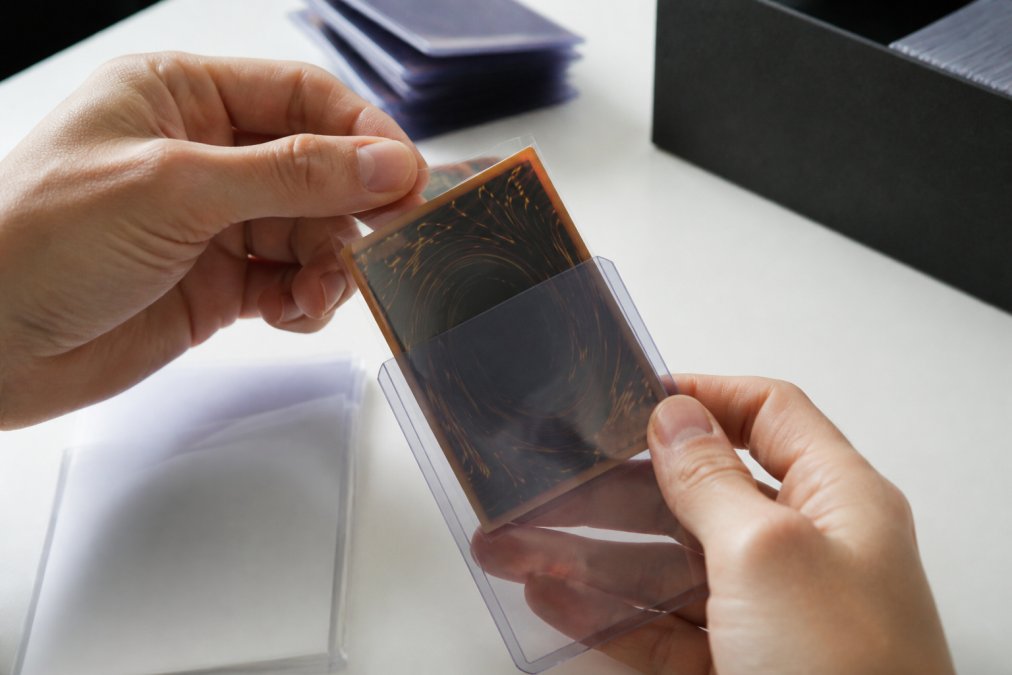
Slide the card into the penny sleeve smoothly. Don't force it. The card should slide in easily, if it's tight, your sleeve is too small.
Once the card is in the penny sleeve, slide the penny sleeve into the top loader. Make sure the card sits flat and centered. The top loader should hold the card firmly but not pinch it.
For valuable cards, add a cardboard stiffener. Place it behind the card so it fills the space in the top loader. This prevents the card from moving around inside the loader.
Now wrap this assembly in bubble wrap. Use two layers for high-value cards. One layer works for standard cards. Secure the bubble wrap with packing tape, but don't tape directly on the card or sleeve, tape only on the bubble wrap.
Best Supplies for Shipping Trading Cards
The best supplies match your card's value. A common card and a grading-ready card need different protection levels.
For common cards:
- Penny sleeve
- Top loader
- Single layer of bubble wrap
- Standard bubble mailer
For high-value or grading-ready cards:
- Penny sleeve
- Top loader
- Cardboard stiffener
- Two layers of bubble wrap
- Rigid bubble mailer or padded box
Liberty TCG hand-checks every card before listing, which means when you purchase grading-ready pulls from our inventory, they're already inspected for condition. This reduces the risk of damage surprises when your cards arrive.
Fall 2025 Collector Chest [MCAP - 2025] →
Store your shipping supplies in a dry place. Moisture can affect the sleeves and bubble wrap before you even use them. Keep supplies away from direct sunlight, which can degrade plastic materials over time.
Shipping High Value Trading Cards
High-value cards demand extra care. A card worth hundreds of dollars justifies spending a few extra dollars on protection.
Double Boxing Techniques
Double boxing means placing your protected card inside one box, then placing that box inside a larger box with padding between them. This technique protects against crushing and impact damage.
Here's how to double box:
- Place your bubble-wrapped card inside a small box (roughly 6x4x2 inches)
- Fill any empty space in the small box with packing peanuts or crumpled paper
- Seal the small box with packing tape
- Place the sealed small box inside a larger box (roughly 10x8x4 inches)
- Fill the space between boxes with packing peanuts or bubble wrap
- Seal the outer box completely with packing tape
The gap between boxes absorbs impact. If the outer box gets crushed, the inner box protects your card.
Insurance and Liability Protection
High-value cards need shipping insurance. Most standard shipping services offer insurance, but you must declare the card's value. Insurance protects you if the package gets lost or damaged in transit.
When you purchase insurance, keep documentation of:
- The card's condition before shipping (photos are helpful)
- The declared value
- The shipping label and tracking number
- Any communication with the buyer about condition
If a card arrives damaged, you'll need this documentation to file a claim. Take photos of the damaged card and packaging before opening it. These photos support your insurance claim.
Some collectors photograph their cards before shipping them. This creates a record of the card's condition at the time of shipment. If a dispute arises, these photos prove the card's condition when it left your hands.
Liability is your responsibility as the shipper. If you ship a card and it arrives damaged, you're liable unless you used appropriate protection. Double boxing and insurance together minimize your risk.
How to Package Cards for eBay
eBay buyers expect specific packaging standards. Following these standards reduces returns and negative feedback.
Use the shipping method you specified in your listing. If you said you'd use tracked shipping, use it. If you promised signature confirmation, include it.
Pack cards the same way regardless of platform, with penny sleeves, top loaders, and bubble wrap. eBay buyers are collectors too. They know what good packaging looks like.
Include a packing slip with the buyer's name and order number. This helps the buyer confirm they received the right package. Place the packing slip in the outer box, not with the card itself.
Seal everything with packing tape. Use enough tape to prevent the box from opening during transit. Reinforce all seams and edges.
Print your shipping label clearly. Make sure the address is correct and the barcode is readable. A misread barcode can delay delivery.
eBay's tracking system updates automatically when you provide your tracking number.
Choosing the Right Shipping Service
Your shipping service choice affects cost, speed, and reliability. Different services offer different levels of protection.
Tracking, Delivery Confirmation, and Postage Costs
Tracking numbers let you and the buyer monitor the package's location. Every shipping service provides tracking. Always include your tracking number in your listing communication.
Common Mistakes to Avoid
New shippers often make the same errors. Learning from others' mistakes saves you money and headaches.
Frequently Asked Questions
What's the safest way to ship a single trading card?
Place the card in a penny sleeve first, then into a top loader or rigid holder. Sandwich the holder between two cardboard stiffeners, wrap with bubble wrap, and place inside a bubble mailer. Avoid standard envelopes, they offer no bend protection. Add tracking and consider insurance for cards valued over $25. This method prevents bending, moisture damage, and handling wear during transit.
Do I need a bubble mailer to ship trading cards securely?
Yes, bubble mailers are one of the best supplies for shipping trading cards. They provide cushioning and moisture protection that standard envelopes cannot. For high-value cards, use a bubble mailer as the inner layer, then place it inside a larger padded box for double boxing. Bubble mailers cost just a few cents per unit and significantly reduce the risk of damage during shipping.
How do I prevent cards from bending during shipping?
Use cardboard stiffeners on both sides of your card holder to create a rigid sandwich. Secure stiffeners with packing tape so they don't shift. Place this assembly in a bubble mailer, then in a box with additional padding. For shipping high value trading cards, double boxing adds an extra layer of bend protection. Avoid overstuffing boxes, which can crush cards through pressure.
Should I use tracking and insurance when shipping trading cards?
Always use tracking, it provides delivery confirmation and proof of shipment. For cards worth more than $25, add insurance to your shipping label. Insurance protects you against loss or damage claims and gives buyers confidence. Tracking numbers also help resolve disputes if a card arrives damaged. Most carriers offer insurance for a small additional fee based on declared value.