

Table of Contents
- Why Pokemon Card Storage Matters for Collection Value
- Best Penny Sleeves for Pokemon Cards
- Card Storage Box for Bulk Cards: Options and Setup
- How to Store Pokemon Cards Long Term
- Protecting High-Value and Graded Cards
- Budget-Friendly DIY Storage Solutions
- Building a Complete Storage System: What You'll Need
- Conclusion
- Frequently Asked Questions
Last Updated: September 20, 2026
Why Pokemon Card Storage Matters for Collection Value
Your Pokemon card collection is an investment. Whether you're chasing nostalgia, building for competitive play, or hunting grading-ready pulls, how you store those cards directly impacts their long-term condition and resale value. A card stored properly in archival-safe materials can maintain mint condition for decades. The same card stored carelessly can suffer from warping, fading, and permanent damage within months.
The difference between these outcomes comes down to one thing: having the right pokemon card storage supplies from the start.
Penny sleeves vary wildly in quality, storage boxes aren't all created equal, and environmental factors like humidity can silently destroy your collection if you're not paying attention.
This guide breaks down exactly what you need to protect your cards properly.
Best Penny Sleeves for Pokemon Cards
Penny sleeves are your first line of defense. They're affordable, they're essential, and they're where most collectors make their first mistake.
A quality penny sleeve should fit snugly without forcing the card, won't off-gas chemicals that damage the card stock, and won't leave residue. The best penny sleeves are acid-free and made from polypropylene or polyethylene terephthalate (PET). These materials are archival-safe, meaning they won't degrade your cards over time.
Look for sleeves that fit standard-sized Pokemon cards without excess room. Loose sleeves allow the card to shift inside, creating friction damage to corners and edges. Too-tight sleeves can crease the card. The fit matters more than you'd think.
Single vs. Double Sleeving for Protection
Single sleeving works for most casual collectors and bulk storage, protecting against dust and minor handling.
Double sleeving, placing a sleeved card into an outer sleeve, is the standard for tournament-ready decks and high-value singles because it protects against spills, humidity infiltration, and accidental bending.
The tradeoff is bulk and cost; most collectors double-sleeve only their best cards.
For grading submission, check your grading service's requirements. Some prefer cards in penny sleeves only. Others accept double-sleeved submissions. Getting this wrong can delay your submission or require resubmission.
Card Storage Box for Bulk Cards: Options and Setup
Once your cards are sleeved, you need somewhere to store them. A card storage box for bulk cards comes in several forms, each with different strengths.
Standard cardboard storage boxes are cheap but absorb moisture and offer minimal environmental protection. Plastic storage boxes (polypropylene, not PVC) seal out dust and provide better control. Metal storage boxes combine durability with moisture resistance and protect against physical damage. The Fall 2025 Collector Chest from Liberty TCG includes a mini portfolio for displaying favorite cards alongside booster packs and foil promos.
![Fall 2025 Collector Chest [MCAP - 2025]](https://cdn.shopify.com/s/files/1/1004/1907/6392/files/654593.jpg?v=1788791719)
Binder pages and portfolio sleeves work for display and reference, though they expose cards to light and air, not ideal for long-term storage of high-value cards.
The key is matching your storage method to your collection's value and your use case. Casual bulk storage? A plastic box works. Grading submission? Card dividers and rigid protection. Display and reference? Binder pages.
How to Store Pokemon Cards Long Term
Long-term storage requires thinking beyond just the container. Environmental factors matter as much as the physical protection.
Environmental Control and Humidity Management
Temperature and humidity are silent killers for card collections. Extreme heat warps cards; high humidity promotes mold and warping; low humidity makes cards brittle. Environmental damage is cumulative and often invisible until the card is already compromised.
The ideal storage environment is cool, dry, and stable. Aim for temperatures between 60-75°F and humidity between 30-50%. If you live in a humid climate or store cards in a basement, garage, or attic, you'll need active humidity control.
Measuring and monitoring humidity is the first step. A digital hygrometer takes the guesswork out of storage conditions. Place one inside your storage box and check it monthly. If humidity consistently exceeds 55%, you need intervention.
Silica gel packets are the most practical first defense. For a plastic storage box holding 1,000-2,000 sleeved cards, one or two standard packets work for 2-3 months in normal conditions. Rechargeable silica gel lets you dry it in an oven and reuse it.
For serious collectors, a small dehumidifier or sealed storage cabinet with built-in desiccant control prevents humidity spikes entirely.
Avoid these storage locations:
Fall 2025 Collector Chest [MCAP - 2025] →
- Basements (prone to flooding, humidity spikes, and temperature swings)
- Attics (extreme heat in summer, cold in winter, moisture from roof leaks)
- Garages (temperature and humidity fluctuate with outdoor weather)
- Direct sunlight (fades card colors permanently within months)
- Near windows or exterior walls (condensation and temperature swings)
A closet in a climate-controlled bedroom, an interior cabinet, or a locked safe in a temperature-stable room is ideal.
Seasonal adjustments matter. In winter, indoor heating dries the air; in summer, opening and closing doors introduces humidity spikes. If you notice condensation on the inside of your storage box, move your collection to a drier location or increase desiccant use immediately.
Organizing by Set, Rarity, and Grading Status
Organization serves two purposes: it helps you find cards quickly, and it protects them by preventing constant handling and shuffling.
Use card dividers to separate cards by set, organized by rarity or card number. Consistency matters more than the specific system.
For cards you're planning to grade, keep them separate and minimize handling. Store them in semi-rigid holders or toploaders until submission.
Create a simple inventory for high-value cards. A spreadsheet with card name, set, condition notes, and location saves hours when you need to find a specific card or file an insurance claim.
Protecting High-Value and Graded Cards
Your best cards deserve better protection than standard sleeves and a plastic box.
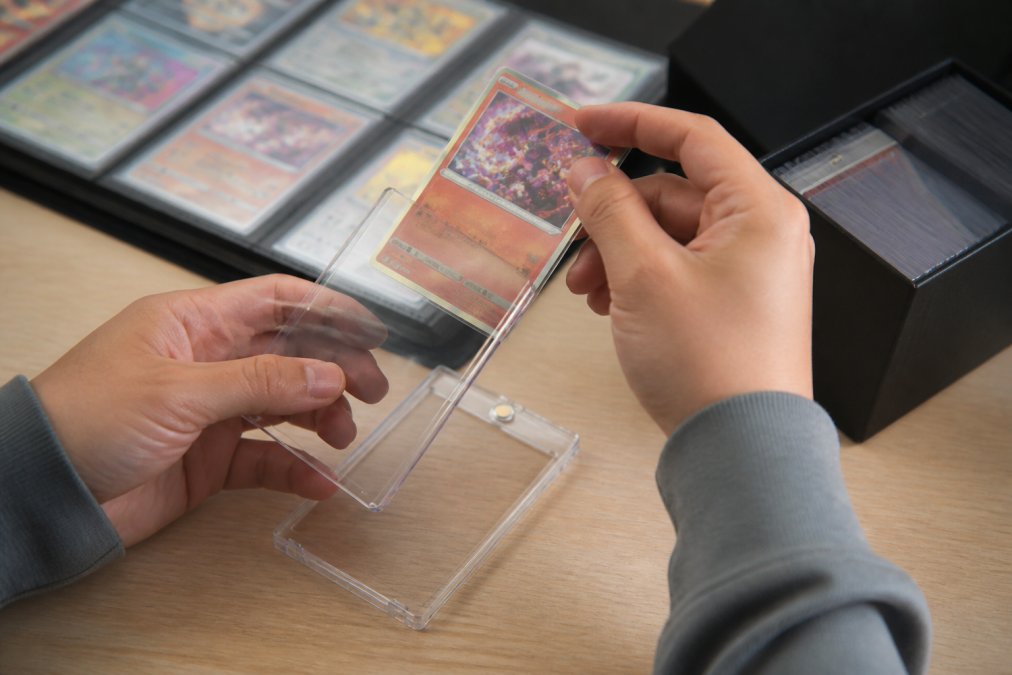
Toploaders, Magnetic Holders, and Display Cases
Toploaders are rigid plastic sleeves that prevent bending and warping. A toploader plus a penny sleeve underneath is the standard for high-value singles and grading submissions. Use the right size, oversized toploaders for standard cards leave room for shifting.
Budget-Friendly DIY Storage Solutions
Professional storage supplies add up fast. If you're building your collection on a budget or just starting out, there are ways to protect your cards without spending a fortune, but you need to know what materials are safe and which household items will damage cards.
Safe household repurposing:
-
Acid-free penny sleeves in a plastic storage container (not cardboard): Bulk penny sleeves and a polypropylene plastic storage box protect your cards from dust and casual damage affordably.
-
Acid-free binder pages (standard 9-pocket pages from office supply stores): Choose pages labeled "acid-free" or "lignin-free." Organize your sleeved cards by set in a basic 3-ring binder to display and reference cards without buying specialty binders.
-
Card dividers from office supply stores: Standard index card dividers or cardboard dividers work just as well as specialty card dividers if they're acid-free. Organize your sleeved cards by set using these dividers in a plastic storage box. Cost: $2-$5 for a pack.
-
Silica gel packets from electronics or craft stores: Toss a few into your storage box to control humidity. These are cheap (often free from packaging) and reusable. If you buy them new, a pack of 10 costs $3-$5.
-
Shoebox storage with organization: A cardboard shoebox works for short-term storage (3-6 months) if you keep it in a cool, dry closet away from sunlight. Cardboard absorbs moisture over time, so this isn't ideal for long-term storage, but it's free if you have old shoeboxes. Organize cards inside with acid-free dividers or even folded acid-free paper.
What NOT to use:
- Standard (non-acid-free) cardboard boxes or paper, they yellow cards and promote brittleness
- PVC plastic sleeves or storage containers, they off-gas chemicals that damage card stock
- Rubber bands or tape, they leave residue and crease cards
- Plastic bags from grocery stores, they trap moisture and aren't archival-safe
- Newspaper or magazine pages as dividers, the ink and paper are acidic
Building a Complete Storage System: What You'll Need
If you're starting from scratch, here's what a complete system looks like for a growing collection.
| Component | Purpose | Budget Option | Premium Option |
|---|---|---|---|
| Penny sleeves | First-line protection | Bulk pack, acid-free | Premium brand, perfect fit |
| Outer sleeves | Double-sleeving for high-value cards | Standard card sleeves | Specialty sleeves designed for Pokemon cards |
| Storage box | Bulk card organization | Plastic storage box | Metal storage box or specialized card storage |
| Card dividers | Organization by set | Office supply dividers | Specialty card dividers |
| Toploaders | High-value card protection | Standard toploaders | Magnetic holders or premium rigid sleeves |
| Humidity control | Environmental protection | Silica gel packets | Dehumidifier or climate-controlled storage |
Conclusion
Protecting your Pokemon card collection starts with the right supplies and ends with consistent care. Whether you're storing casual bulk cards or grading-ready high-value singles, the principles are the same: use acid-free, archival-safe materials; control your storage environment; and minimize handling of your best cards.
Frequently Asked Questions
What's the best way to store bulk Pokemon cards?
Use acid-free storage boxes with card dividers to organize bulk collections by set or rarity. Store boxes in a cool, dry place away from direct sunlight and moisture. For cards you're not accessing frequently, archival-safe boxes with UV protection prevent fading and warping over time. Consider using penny sleeves for each card before placing them in boxes to add an extra layer of protection against dust and handling damage.
How do you protect high-value Pokemon cards from humidity?
Store high-value cards in a climate-controlled environment with humidity levels between 30-50%. Use silica gel packets or dehumidifiers in your storage area to prevent moisture buildup that causes card warping and mold. Keep cards in toploaders or semi-rigid holders inside acid-free boxes, and avoid basements or attics where humidity fluctuates. For grading submission, ensure cards are completely dry and stored in a stable environment for at least 48 hours before packing.
Do I need toploaders for all my Pokemon cards?
Toploaders are best reserved for high-value, mint condition, or grading-ready cards. Standard bulk cards benefit more from penny sleeves and storage boxes, which are more cost-effective for large collections. Use toploaders for cards worth $50 or more, cards you plan to grade, or cards with special significance to your collection. This approach balances protection with practicality for tournament-ready decks and investment-focused portfolios.
What's the difference between binder pages and deck boxes for storage?
Binder pages display cards and allow easy browsing of your collection, making them ideal for organizing cards by set or rarity. Deck boxes are compact and portable, perfect for tournament play and protecting tournament-ready decks during transport. For long-term storage, archival-safe binders with acid-free pages preserve cards better than cardboard boxes. Choose binders for active viewing and organization, deck boxes for portable protection, and rigid storage boxes for bulk archival preservation.